
Rethinking Corporate Value Growth: CEOs on a New Track
By Mike Flache, Chairman, Digital Growth Collective
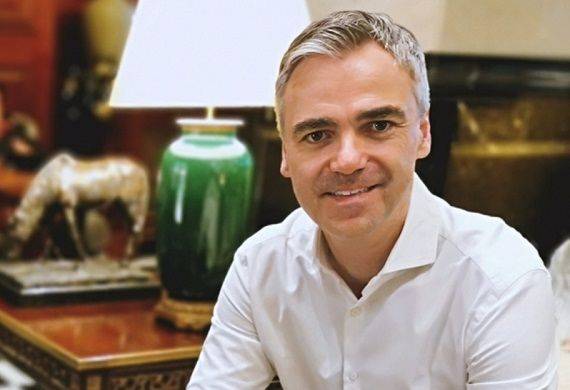
In an exclusive conversation with Global Leaders Insights, Mike Flache, Chairman at Digital Growth Collective, shares how corporate value creation is being reshaped by capability-led strategies rather than isolated efficiency gains. Flache explains that sustainable growth today depends on aligning expertise, capital, and networks with clear strategic intent. He highlights the rising importance of collaborative partnerships, adaptive leadership, and organizational readiness in translating technology into real value. Emphasising the evolving CEO mindset, Flache notes that clarity, speed, and trust are now decisive drivers of value, particularly as companies navigate technological acceleration, geopolitical shifts, and intensifying competition for talent.
1. What has shifted in how corporate value is built today?
The way companies build value has changed noticeably in recent years. For a long time, it was sufficient to implement efficiency programs, optimize operational performance, and introduce isolated technological measures. Today, that is no longer enough. Value increasingly emerges where companies are able to anchor their strengths within a constantly shifting environment and continue developing them with discipline.
A key shift is that corporate value is now shaped far more by capabilities—capabilities to deal with change productively, to test new business models faster, and to form the right partnerships. Technology is not an end in itself; it is an enabler that only works when people and processes can carry it. Digital maturity does not come from tools but from a combination of structures, competencies, and leadership.
At the same time, stakeholders view value differently. Investors pay attention not only to metrics but also to a company’s ability to position itself strategically in uncertain times. Customers expect relevance and responsibility. Employees want to see purpose and perspective.
Another critical aspect is speed. Markets evolve so quickly that traditional planning logic reaches its limits. Value today is created not just through long-term programs but through the ability to translate insights precisely and rapidly into action.
In summary, value creation is becoming increasingly holistic—driven by strategic clarity, digital competence, resilient business models, and leadership that provides direction. Companies that master this combination are laying the foundation for tomorrow.
Also Read: From Onboarding to Retention: The 5 Stages to Scale Global Enterprises
2. How can CEOs better align expertise, capital, and networks to support value growth?
To drive sustainable value growth, CEOs benefit from aligning three resources: expertise, capital, and networks. Each is effective on its own, but their full potential unfolds only when they reinforce one another.
Expertise is not just specialized knowledge; it is the ability to interpret situations accurately and make well-grounded decisions. Many organizations have know-how but fail to deploy it in a way that genuinely moves the business forward. A CEO should ensure expertise is applied where it has the most significant impact: on strategic priorities rather than operational distractions.
Capital is also more than the budget. It reflects focus. The essential question is: Which initiatives receive resources and which do not? In times of constrained means, capital allocation becomes a strategic lever that determines where value can realistically be created.
Networks are an underestimated factor. They provide access to perspectives and opportunities that often remain invisible within the organization. Exchanges with other leaders, technology experts, or investors can accelerate developments, reduce risks, and open new pathways.
Aligning these three areas succeeds when CEOs articulate a clear guiding framework: What do we stand for? What are we investing in? With whom are we shaping the future? Once these questions are answered, a structure emerges in which expertise is focused, capital is allocated wisely, and networks are activated with intention.
Answering these questions creates a structure that focuses expertise, allocates capital wisely, and activates networks with intention. This orchestrated approach drives value growth.
3. What distinguishes collaborative partnerships from purely transactional ones?
The difference between collaborative and purely transactional partnerships lies in their fundamental orientation. Transactions have a clear purpose: the exchange of performance for compensation. They serve a function but rarely create lasting value. Collaborative partnerships, by contrast, emerge when both sides are willing not only to exchange resources but to shape a joint development.
In a collaborative relationship, the focus is not on the "what" but on the "why." It is about a shared understanding of objectives and a willingness to look beyond the immediate task. This includes sharing perspectives, openly questioning assumptions, and making decisions transparently. Such partnerships rely less on contracts and more on trust.
Another distinction is how risks are handled. In transactional relationships, partners attempt to mitigate or shift risks. In collaborative models, risks are assessed and carried jointly. This mindset enables innovation by creating space for experimentation and learning.
Time also plays a role. Transactions have a defined endpoint. Collaboration evolves across phases and lays the foundation for recurring or expanding value contributions.
Ultimately, it comes down to mindset. Collaboration requires approaching the other party not as a service provider or supplier, but as a strategic ally. When both sides recognize that they can achieve more together than individually, they create value that extends far beyond the outcome of any single transaction.
4. How is the CEO mindset evolving, and why does it matter more than ever?
The CEO mindset is evolving because leadership demands today are more complex than in the past. The traditional role—setting strategy, allocating resources, driving performance—is no longer sufficient on its own. The world has become too dynamic, and many developments cannot be thoroughly planned.
A modern CEO doesn't need to know everything but must be able to identify what truly matters and provide orientation. That means grasping complex situations quickly, handling ambiguity, and remaining able to act. Leadership becomes less mechanical and more driven by awareness.
A significant shift lies in our approach to uncertainty. In the past, uncertainty was seen as a problem to eliminate. Today, it is a constant reality in every decision. CEOs who accept uncertainty as part of their environment make better decisions because they do not attempt to eliminate risk—they work with it responsibly.
The perspective on people is also changing. Organizations succeed only when people are willing to contribute meaningfully. A CEO who listens, takes perspectives seriously, and creates clarity generates energy within the company. This is not a “soft factor” but a decisive driver of value—particularly in fast-moving environments.
Why does this mindset matter? Because transformation does not happen through programs alone; it begins with attitude. A CEO with a clear, reflective, and open mindset creates conditions in which teams act more boldly, learn more quickly, and work more effectively.
5. Which global factors will most influence corporate value growth over the next three to five years?
Several global factors will shape corporate value creation over the next three to five years. One of the most important is technological acceleration, particularly through artificial intelligence. Companies that integrate these developments effectively can simplify processes, unlock new business models, and shorten decision cycles.
Geopolitical developments will also play a significant role. Many markets are shifting, supply chains are being restructured, and strategic dependencies are being reassessed. Companies must more carefully evaluate which regions offer long-term stability and where investments should remain flexible.
Capital markets will also influence value creation. Access to capital is changing, and investors increasingly prioritize resilience over sheer growth. Companies that maintain a stable financial structure while prioritizing future-oriented themes will have an advantage.
Demographic trends add further pressure, particularly on the labor market. Talent competition is intensifying. Organizations must find ways to attract, develop, and retain skilled people.
Sustainability is also moving further into focus—not as a regulatory obligation but as an economic necessity. Resource constraints, energy costs, and societal expectations all shape the context in which companies create value.
These factors do not operate in isolation; they reinforce or counterbalance one another. What matters most is how companies interpret, prioritize, and translate them into concrete actions.
Also Read: Navigating Mergers and Acquisitions for Strategic Growth
6. What advice would you give to CEOs staying on track toward future value growth?
Creating clarity is essential. Companies often lose momentum because priorities are unclear or shift too frequently. A CEO needs a precise understanding of what the company must build on in the coming years—and what it will deliberately not pursue.
Second, invest in capabilities, not just in projects. Many initiatives fail because the organization is not prepared for them. Future-ready companies develop competencies systematically—across technology, leadership, and collaboration.
Third, leverage networks actively. Exchanges with other leaders and industries are not a "nice to have" but a strategic advantage. They broaden perspectives, prevent blind spots, and accelerate decisions.
Fourth, reflect on your own role. A CEO does not need all the answers but must be able to ask the right questions. This includes pausing regularly to examine one's own stance and seeking different perspectives.
Fifth, combine speed with quality. Value emerges when a company gains momentum without losing direction. The key is to act early while avoiding unnecessary haste.
Finally, convey stability. In volatile times, people look for orientation. A CEO who remains calm, communicates clearly, and shows a reliable stance provides exactly what the organization needs to achieve long-term value growth: trust and direction.
.jpg)