
The Rise of Gen-Z Politicians: How Young Leaders Are Changing Politics
By Ajay Sunny, Correspondent at Global Leaders Insights
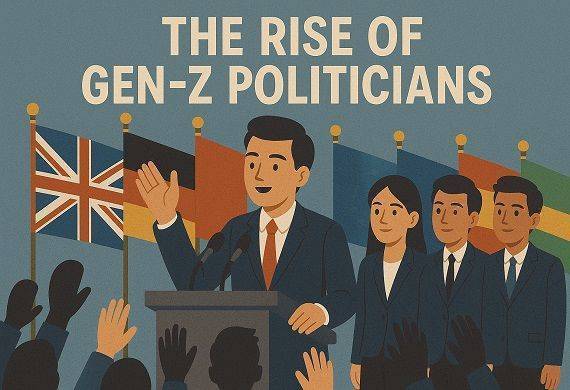
The world is witnessing a distinct change in political structures with Gen-Z coming into the limelight of life. The generation born in the late 1990s-early 2010s is also entering the leadership scene with a minimalist, performance-oriented practice undermining the political institutions. Their coming is changing the manner in which governance is done, leaders communicate, and citizens participate in public decision-making. They are not waiting until they become seniors; they are going straight into positions that are driven by urgency and responsibility.
A Generation Formed By Constant Upheaval
Gen-Z grew up during financial slowdowns, the climate crisis, rapid technological changes, and a nonstop stream of global news. These conditions shaped a political mindset grounded in practical concerns rather than abstract ideological debate. Their understanding of public issues developed through exposure to economic instability, environmental stress, and social movements unfolding in real time across digital platforms.
Many Gen-Z leaders entered politics after participating in student movements, community work, environmental campaigns, and online advocacy. Their political journeys began with lived experiences involving education access, job insecurity, privacy concerns, and local governance failures. This background produced leaders who prefer direct action and measurable outcomes over lengthy ideological positioning. They carry a sense of immediacy that stems from watching global issues intensify without timely intervention.
A Communication Shift That Redefines Engagement
Gen-Z politicians communicate differently from their predecessors. They use simple, direct language that avoids unnecessary formality. Instead of depending solely on press releases, they speak to the public through online videos, live interactions, and short updates. Their communication is shaped by the platforms they grew up with, where responses are expected quickly, and clarity is valued over elaborate phrasing.
This style has brought younger audiences into political discussions. People who previously felt distant from policymaking—students, young professionals, gig-economy workers, and first-time voters - are paying closer attention to leaders who describe real issues without political jargon. Their openness makes public office appear more reachable and less reserved for long-established political families.
Digital communication also increases transparency. Constituents can observe policy positions, daily responsibilities, and legislative updates directly from their representatives. Instead of relying entirely on news outlets or intermediaries, citizens now engage with political information at the same speed it is produced, creating a more informed and active voter base.
Also Read: Pragmatic Diplomacy: How 2025 Is Redefining Global Alliances
Young Leaders Making Visible Impact Across Regions
Several Gen-Z politicians are already holding significant positions around the world. In New Zealand, Chlöe Swarbrick entered Parliament at 23 and became known for her work on climate policy, drug reform, and mental health. As Swarbrick puts it, “Young people aren’t the future anymore, we’re the present, and our policies need to reflect the urgency of now.” In the United States, Maxwell Frost became the first Gen-Z member of the House of Representatives and focused on issues such as gun violence prevention, housing access, and social justice. “We’re not here to inherit broken systems; we’re here to rebuild them before they collapse on us,” says Maxwell Frost.
Young leaders are emerging in Europe, Africa, Latin America, and Southeast Asia as well. Many gained prominence by combining legislative work with activism, using their platforms to mobilize public support for environmental reforms, transparency initiatives, and economic fairness. Their early involvement in civic life gives them a clear understanding of how public policies directly affect daily challenges.
In India, Gen-Z voices are becoming prominent in youth wings of political parties, university elections, community organisations, and social movements. Although national representation remains limited, younger leaders influence public debates on climate action, unemployment, digital rights, and women’s safety. They play active roles in public forums, citizen campaigns, and local governance discussions, shaping the direction of national conversations even without holding high office.
Issue-Centric Leadership Over Conventional Ideological Lines
Gen-Z leadership is shaped by specific issues rather than rigid ideological identities. Climate change, income inequality, public health, mental well-being, gender equality, and technology governance form the foundation of their political priorities. They emphasise practical solutions that show visible progress. Instead of aligning uncritically with party positions, many Gen-Z leaders push for stronger commitments from their own organisations and challenge outdated approaches.
Their comfort with global communication allows ideas to spread quickly across borders. A debate in one region about data protection or environmental regulation can influence discussions elsewhere within days. Gen-Z politicians often learn from one another through social platforms, international youth networks, and collaborative forums, creating a faster transfer of political strategies and policy models. Their approach extends beyond national boundaries and reflects a more connected understanding of governance.
Representation and Authentic Public Identity
Gen-Z brings broader representation into political institutions. They come from diverse social, economic, and cultural backgrounds, offering perspectives that had limited visibility in earlier generations of leadership. Many speak openly about financial struggles, identity-related challenges, and mental health pressures. Their willingness to discuss these topics allows voters to see leaders who face the same realities as the communities they represent.
Gen-Z politicians favour a collaborative style. They run public consultations, open discussions, and community-driven initiatives. Their approach is to involve citizens in shaping policies rather than presenting decisions as directives from authority. This method reduces the gap between elected representatives and the public and strengthens trust in democratic processes.
Read More: Elon Musk's America Party: Key Policies, Vision & How it Differs from Trump's GOP
Institutional Barriers and Generational Resistance
Despite their growing presence, Gen-Z politicians encounter resistance from established political structures. Senior leaders question their experience, challenge their direct communication, and express concern over their fast-paced expectations. Political systems built on hierarchy and slow processes struggle to adapt to a generation that values responsiveness and clarity.
Barriers include difficulties in accessing campaign funding, navigating party gatekeeping, and overcoming scepticism from voters who equate age with competence. Legislative environments move slowly, often at odds with Gen-Z’s demand for timely action on climate change, data protection, and employment reforms. These obstacles show how deeply entrenched traditional political practices remain, but they also highlight the need for system-wide updates that match modern realities.
A Changing Future Defined by Youth Participation
The rise of Gen-Z politicians is reshaping expectations of public leadership. Their influence is prompting faster communication, clearer commitments, and stronger accountability. As more young leaders enter political roles, several long-term developments are becoming evident: increased urgency in policy responses, expanded representation in decision-making, and greater participation from younger voters.
Gen-Z’s emergence does not seek to replace older leaders, but to push political systems to recognise present-day challenges with more seriousness and speed. Their approach is grounded in practical concerns, real experiences, and a desire for visible progress. They represent a shift toward leadership that is more open, more connected, and more aligned with the world people live in today.
Their rise signals that political authority is no longer determined by age but by clarity of purpose, responsiveness, and commitment to solving issues that affect future generations. Gen-Z is redefining modern governance, and their influence is set to grow as they continue to shape the political landscape.
Magazine Deck


