
Spain Pushes EU Joint Army as Greenland Dispute Raises Tensions
By Global Leaders Insights Team | Jan 22, 2026
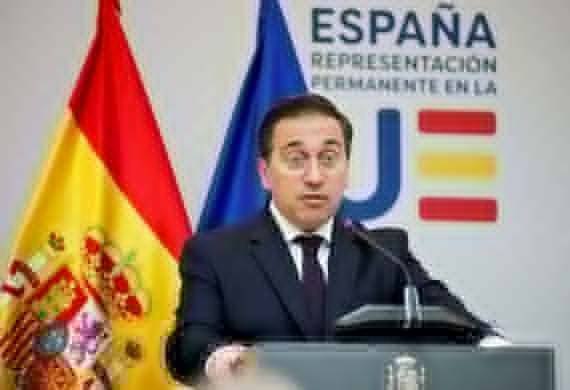
Spain has urged the European Union defence bloc to move toward creating a joint EU army, arguing that deeper defence integration is necessary as geopolitical tensions mount, including renewed pressure linked to the Greenland dispute.
Speaking at the World Economic Forum Davos, Spanish Foreign Minister José Manuel Albares said the EU should advance beyond fragmented national defence systems and work toward a common military force.
He said Europe could no longer rely solely on coordination among 27 separate armies if it wanted to protect its strategic autonomy and political interests.
- Spain urges EU to move toward joint army amid Greenland-linked tensions
- José Manuel Albares says Europe must act collectively on defence
- Greenland dispute revives debate on EU military autonomy alongside NATO
The comments come ahead of an emergency meeting of EU leaders in Brussels, convened to discuss responses to recent remarks by US President Donald Trump regarding Greenland. Trump had suggested that Washington could seek greater control over the Arctic territory, which belongs to Denmark, prompting concern across Europe. Although his tone later softened after discussions with NATO Secretary General Mark Rutte, European officials remain wary of renewed pressure from Washington.
Albares said the EU must show it cannot be pushed or threatened, whether through military, political, or economic means. He added that a joint European army would strengthen the bloc’s ability to act collectively and send a clear signal of unity.
Spain stressed that the proposal is not intended to replace NATO alliance structures. Instead, a European force would operate alongside NATO, reinforcing Europe’s capacity to contribute to European security while reducing overdependence on external partners.
The idea of a European army has surfaced repeatedly over the decades, most notably in the early 1950s during the Cold War, but has faced resistance due to concerns over sovereignty and public opinion. Albares acknowledged that persuading European citizens to support a shared military structure would be difficult but argued that efficiency and security demands now outweigh those concerns.
Also Read: Europe Holds Line at Davos as CEOs Urge Calm Response to U.S.
As Arctic routes gain strategic and economic importance, Greenland has become a focal point in broader debates about defence, influence, and control. Spain’s call reflects growing momentum within the EU to reassess defence cooperation and accelerate steps toward greater strategic autonomy.
Magazine Deck


