
Mukesh Ambani's Empire Confronts Challenges Amid Rising US Trade Tariff Risks
By Global Leaders Insights Team | Mar 11, 2025
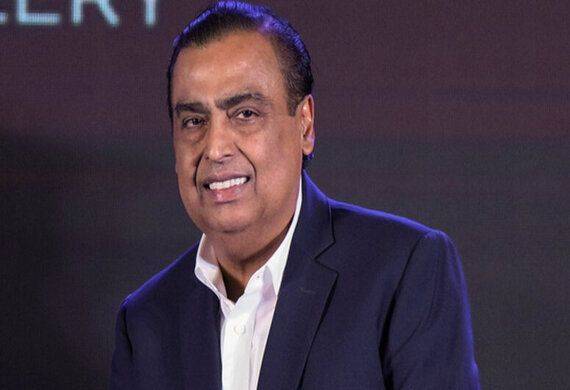
Things aren't going so well for Asia's richest tycoon. Mukesh Ambani cannot afford for Donald Trump to smash open the latch on India's 1.4 billion consumers after going to such lengths. But that is how the threat is developing.
New Delhi is concerned that any retaliatory trade action by Washington will extend beyond India's "massive tariffs," as the US president described them on Friday. Trump claimed that American businesses conduct "very little business inside" the world's most populous country.
Indian conglomerates have varying levels of protection from foreign competition. While almost all of them are at risk from trade war concessions, Ambani's empire appears to be particularly vulnerable.
Retail and digital services, which have received $50 billion in investments since 2020, are critical to the group's $200 billion market capitalization. Both units, which are currently part of the flagship Reliance Industries Ltd., are getting closer to their much-anticipated public offerings, though they are not quite ready. Bloomberg News reported last week that the sprawling retail industry is undergoing an overhaul due to sagging analyst estimates of its value.
At this critical juncture, Elon Musk's entry into the market with Starlink Inc., or Washington dictating changes to domestic policies that have kept Amazon.com Inc. and Walmart Inc. at a disadvantage on Ambani's home turf, could be disruptive.
Ambani's Jio Platforms Ltd., with nearly 500 million subscribers, has joined India's other major terrestrial wireless carriers in opposing Starlink. Musk's satellite broadband service will most likely be exempt from government auctions for telecom spectrum. Losing high-paying customers to a new player with lower regulatory costs may put a cap on pricing.
Jio's average revenue per user has increased by 12% over the last year. But earning $2 or more per month is insufficient for a high-profile public listing. Ambani has built a media juggernaut around the telco as its core offering.JioHotstar, his online streaming app, is offering data customers Hollywood movies, HBO shows, and the annual Indian Premier League for slightly more than $1 — a tempting offer in a cricket-crazy country. It is a costly way to gain attention, and the last thing Ambani wants is a breach in his moat.
Aside from carriage and content, the billionaire also needs to consider commerce. Before the inauguration, Trump met with Walmart CEO Doug McMillon at his Mar-a-Lago estate. That meeting was well-received in New Delhi, where restrictive policies have hampered Walmart's Flipkart and Amazon's local marketplace—but benefited Reliance Retail. Despite these obstacles, McMillon is preparing for Flipkart's initial public offering next year.
Foreign investment regulations prevent American-owned platforms from carrying their own inventory or offering deep discounts.These restrictions, ostensibly put in place to protect millions of mom-and-pop stores, do not apply to domestic players such as Reliance. In addition to more than 19,000 stores, the country's largest retailer operates its own beauty and clothing apps, as well as JioMart, an online grocery service. Any promise extracted by Trump's negotiators to change the regulatory landscape could erode Ambani's advantage.
Reliance's consumer pivot is supported by its legacy cash cow, oil-to-chemicals. Ambani handled geopolitics, a key driver of that business, expertly during the first Trump administration, when he lobbied to keep Venezuelan crude flowing to his refinery despite US sanctions. Still, Trump2.0 could be different. It is unclear how much more profit Reliance can extract from Russian oil, which has increased from a negligible portion of India's imports to nearly a third since the outbreak of the war in Ukraine.
Trump may also get involved in this situation. The South Asian country will buy "a lot of our oil and gas," the US president stated after meeting with Prime Minister Narendra Modi last month. However, a barrel of American oil costs $7 to $8 more than the Russian equivalent. "The increased intake of US crudes will most likely impact refining margins" for Indian firms, according to Kotak Institutional Equities. With Chinese supplies flooding global petrochemicals markets, Ambani's unit's sub-9 percent profitability may struggle to return to 11 percent last year.
Three large franchises, three distinct headaches coming from the same source in Washington. Topping the list is control of the family's crown jewel, Reliance Industries, which will be passed down to Ambani's three children as part of a planned succession.
Anant Ambani, the youngest and heir apparent to the energy business, made global headlines last year for his $600 million, five-month wedding celebration. He recently made headlines for hosting Modi at his animal sanctuary. What investors want from the younger Ambani is an update on the $9 billion set aside for solar modules, hydrogen electrolyzers, and energy storage batteries. For starters, the investment outlook for clean energy has deteriorated globally. For example, the battery factory has missed a performance milestone, and the government has sought damages because the unit receives a taxpayer-funded incentive.
Given that the group once silenced skeptics by completing the first phase of the world's largest refinery complex in a record 33 months, even a minor delay in execution a quarter-century later is not a good look. Despite the disappointments, analysts expect Reliance to gain 24% over the next year. For that, Ambani will need to reclaim control of a narrative that is slipping away from him.
Magazine Deck


